Category: Mobile Development

  • Top 5 Mobile App Development Companies in the USA for 2026

    Top 5 Mobile App Development Companies in the USA for 2026

    The best app development company USA buyers can hire is the one whose skills, pricing model, and post-launch support match your app, not the one with the loudest brand. Hatzs Dimensions suits companies that want native iOS, native Android, or React Native work alongside AI and data engineering. Simpalm suits teams that want a US-based agency with a published hourly rate band. TechAhead suits buyers who want every framework handled by one team. Zoolatech suits high-scale consumer and enterprise platforms. Riseup Labs suits products that add AI features to a cross-platform app.

    The problem is that thousands of firms claim to build custom mobile apps, their portfolios look alike, and few of them state what they charge. This article compares five mobile app development companies in the United States on what you can check: which platforms they build for, who each one fits, and how they price the work.

    One disclosure first. Hatzs Dimensions is our company, so it is listed first. The other four are ordered by how clearly they fit a specific kind of buyer, not by a universal score. Where a company publishes a rate, you will see it. Where it does not, you will see what to ask for instead.

    1. Hatzs Dimensions

    Hatzs Dimensions is a custom software and AI company that builds native iOS, native Android, and React Native apps for businesses that also need data, cloud, or AI work around the app. It is the strongest fit when the app is one part of a larger product.

    Two smartphones lie side by side on a workbench with a wrench and a coiled cable beside them.

    A fixed price only helps if you define the scope before the first sprint.

    What it builds

    The mobile team works in the standard toolchain for each platform. The company also lists app maintenance with 24/7 monitoring, so the app keeps up with new OS releases after launch.

    Who it suits and what it costs

    This company suits CTOs, founders, and product leaders at companies from Series A startups to Fortune 500 enterprises. The team is senior-only, with 7+ years of experience. It reports 250+ clients and 98% retention, and it cut insurance operations costs by 30% for BrokerOS.

    Pricing follows two engagement models. The Fixed Price Model sets scope, timeline, and budget upfront. Dedicated Teams scale as your workload shifts. There is no public rate card, so bring your target platforms, feature list, and integrations to get a real quote.

    2. Simpalm

    Simpalm is a US-based mobile app development company in Rockville, Maryland, founded in 2009. It builds iOS, Android, and cross-platform apps for startups, SMBs, enterprises, and nonprofits, and it is the pick here for buyers who want a domestic partner.

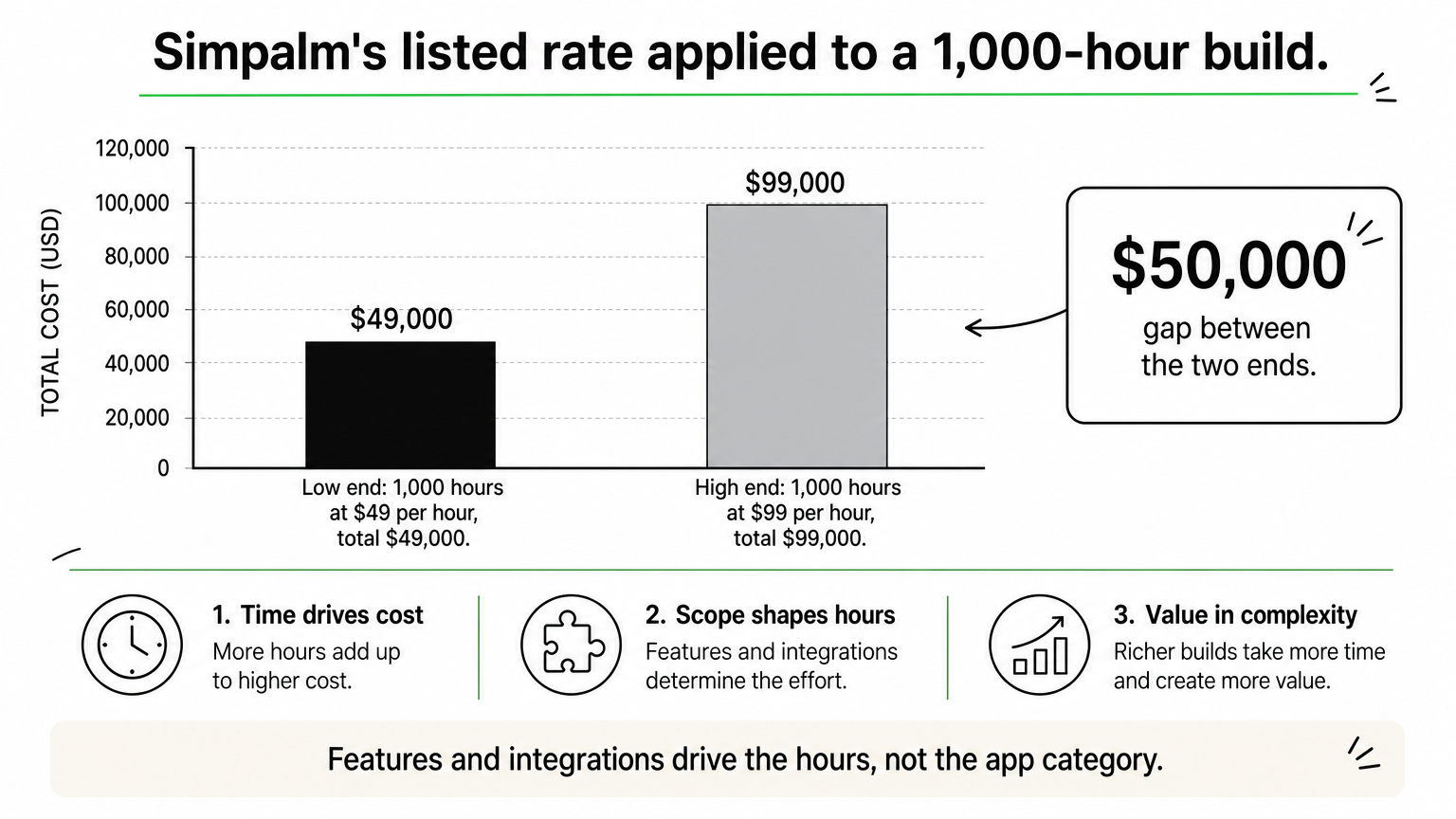
    Bar chart comparing a 1,000-hour build at Simpalm's low rate of $49,000 and high rate of $99,000.

    A published rate band lets you sanity-check any quote before you sign.

    What it builds

    Simpalm covers the full path from product strategy to maintenance. Its design and consulting work sits alongside development, which helps first-time app owners who still need to shape the idea.

    • iOS and Android development
    • Flutter and React Native cross-platform apps
    • UI/UX design and product strategy
    • AI-powered mobile applications
    • App maintenance, modernization, and support

    Who it suits and what it costs

    Simpalm suits buyers who want a US-based team with design and strategy included. Its team runs roughly 50 to 150 people, which is large enough for a full build and small enough to get attention.

    Its listed rate is $49 to $99 per hour. As an illustration, a 1,000-hour build at that band comes to $49,000 to $99,000. Your real total depends on scope, because features and integrations drive the hours, not the app category.

    3. TechAhead

    TechAhead, based in Agoura Hills, California, is a good choice for companies that want native iOS, native Android, Flutter, and React Native handled by one team. That range lets you pick a framework on merit instead of on what a vendor happens to offer.

    Two toolboxes sit side by side on a table, one with two open drawers and one with a single tray.

    Choose the framework after the product requirements, because switching later costs more.

    What it builds

    The value here is breadth under one roof. If you are still deciding between a native pair and a shared codebase, one team can price and argue both options.

    • Native iOS
    • Native Android
    • Flutter
    • React Native

    Who it suits and what it costs

    TechAhead suits companies that are undecided between native and cross-platform. Ask for a written recommendation with tradeoffs. A native pair means two codebases to build and test, while a cross-platform build shares most of its code.

    No rate is published here, so request an estimate per platform and compare a native quote against a cross-platform quote for the same feature list. The gap tells you what native performance costs you.

    4. Zoolatech

    Zoolatech, based in Miami, Florida with global delivery, focuses on enterprise mobile platforms, high-scale consumer apps, and long-term product engineering. It fits larger companies planning a multi-year roadmap, not a quick prototype.

    Apps with millions of users are a product engineering problem before they are a mobile problem.

    What it builds

    The pitch is sustained engineering rather than a one-off launch. That matters when your app must carry heavy traffic, integrate with internal systems, and keep shipping for years.

    • Enterprise mobile platforms
    • High-scale consumer apps
    • Long-term product engineering
    • Distributed delivery teams

    Who it suits and what it costs

    Zoolatech suits established companies with a long roadmap and an internal product owner. A smaller team with a single MVP in mind will likely find one of the other four a tighter fit.

    Rates are not published. Ask whether work is priced per project or per team, since long-term engagements often use team-based pricing. Also ask how delivery hours overlap with your working day.

    5. Riseup Labs

    Riseup Labs, based in New York with global delivery, builds AI-powered mobile apps, cross-platform products, and scalable product engineering. It suits teams that want AI features inside a custom mobile app development project from day one.

    An AI feature changes your backend, data, and compliance needs, not just your screens.

    What it builds

    Its focus is cross-platform delivery paired with AI capability. That pairing works best when the AI logic and the mobile interface are planned together.

    • AI-powered mobile apps
    • Cross-platform development
    • Scalable product engineering
    • Delivery from New York and global teams

    Who it suits and what it costs

    Riseup Labs suits startups and product teams adding AI to a cross-platform app. Check what share of the budget goes to the mobile build and what share goes to AI and backend work.

    Rates are not published. Request a quote that splits mobile, backend, and AI line items, and confirm which time zones the team covers so reviews and stand-ups happen at workable hours.

    How to choose among these five

    Pick on fit, not rank. If your app depends on AI, data, or cloud work, start with Hatzs Dimensions. If you want a domestic agency with a published rate, look at Simpalm. If you are unsure whether to go native, talk to TechAhead. For heavy-traffic platforms, consider Zoolatech, and for AI features in a cross-platform app, consider Riseup Labs.

    Whichever you shortlist, send each firm the same feature list and ask for the same breakdown by platform and by phase. If you want a quote built around your scope, talk to Hatzs Dimensions about your app.

  • MVP Development Services: What You Get, Process, and Cost

    MVP Development Services: What You Get, Process, and Cost

    You have an idea, a budget that will not stretch forever, and investors or customers waiting for proof. Hiring the wrong team at this stage costs months you cannot recover. So before you sign anything, you need to know what a vendor actually delivers, how the work unfolds, and what it should cost.

    MVP development services cover the work of turning your idea into a working product with only the features needed to test it with real users. That typically includes discovery, UX design, engineering, testing, and launch support. In the US, most projects run 8 to 16 weeks, and costs commonly range from $30,000 to $150,000 depending on scope, integrations, and any AI components.

    Below, we break down what a good MVP development company includes in its scope, the four stages of a typical delivery process, and the factors that move your price up or down. We also cover how to compare vendors, including team seniority and engagement models. At Hatzs Dimensions, we have shipped products for 250+ clients, from Series A startups to Fortune 500 teams, so we draw on that experience throughout.

    Why startups use MVP development services

    Startups hire outside teams for one reason: speed to evidence. You do not need a finished product to learn whether people will pay for it. You need the smallest version that answers that question. MVP development services for startups exist to build that version quickly, with people who have done it many times before.

    Faster access to real user feedback

    Every month you spend building without users is a month of guessing. A capable team compresses that period into 8 to 16 weeks, which means you hear from real customers while your assumptions are still cheap to change. Early feedback is also the strongest asset you can bring to an investor conversation.

    Take a founder in logistics who wants a full dispatch platform. An experienced team might suggest launching with only driver check-in and route assignment, then watching how dispatchers use it. That narrow release tests the core workflow and often reveals that the feature the founder planned for month six is not the one customers want first.

    Lower risk than building a team from scratch

    Hiring is the hidden cost of going it alone. Recruiting a senior engineer, a product designer, and a QA lead can take three to six months before anyone writes code, and you carry those salaries whether the idea works or not. An MVP development company gives you a ready team for a defined period.

    Option Time to start Cost shape Main risk
    In-house team 3 to 6 months to hire Salaries and benefits, ongoing Slow start, fixed overhead
    Freelancers 1 to 3 weeks Hourly, varies widely Coordination gaps, uneven quality
    MVP software development company 1 to 3 weeks Fixed price or dedicated team Vendor fit, which you must vet

    Experience that prevents expensive mistakes

    Scope is where most MVPs go wrong. Founders add "just one more" feature until the build takes nine months instead of three. A seasoned MVP software development company pushes back, ranks features by what they teach you, and cuts the rest from version one.

    Sticky notes of features being removed from a desk, leaving one note on a laptop.

    An MVP is not a smaller product. It is a sharper question.

    Senior engineers also make architecture decisions that protect you later. They choose a stack you can hire for, keep the data model clean, and avoid shortcuts that force a rewrite after launch. At Hatzs Dimensions, our senior-only team has spent 7+ years shipping production systems, including AI features, so a prototype does not become a dead end when you start to scale.

    What MVP development services include

    Scope varies by vendor, but solid MVP software development services follow the same backbone. Ask for each item below in writing, because a quote that skips one usually hides the cost somewhere else.

    Core deliverables

    Most MVP app development services bundle five workstreams into one engagement. Together they take you from a rough idea to a product that real users can open on day one.

    • Discovery and scoping: stakeholder workshops, user stories, a ranked feature list, and a clear definition of success.
    • UX and UI design: wireframes, a clickable prototype, and a basic design system.
    • Engineering: front end, back end, database, APIs, and integrations such as payments or authentication.
    • QA and testing: functional tests, device checks, and security basics.
    • Launch and support: cloud deployment, analytics setup, and a post-launch bug-fix window.

    Extras worth asking about

    Analytics deserves special attention. Without event tracking and funnels, you launch but learn nothing. Ask the vendor to instrument key actions and set up a feedback channel before release.

    A launched MVP without analytics is just a smaller product with no answers.

    AI features are another common add-on. If your product needs an AI agent, a recommendation engine, or document automation, confirm that the team has shipped AI to production, not just built demos. Domain expertise matters too. An MVP product development company that has built healthcare or fintech apps already knows the compliance basics you would otherwise pay to discover.

    What usually stays outside the quote

    Ongoing marketing, content creation, and large-scale infrastructure typically sit outside the fixed scope. So does legal work such as privacy policies and terms of service. Whether you hire an MVP development company in the USA or offshore, confirm these gaps up front so your budget holds after kickoff.

    How the MVP development process works

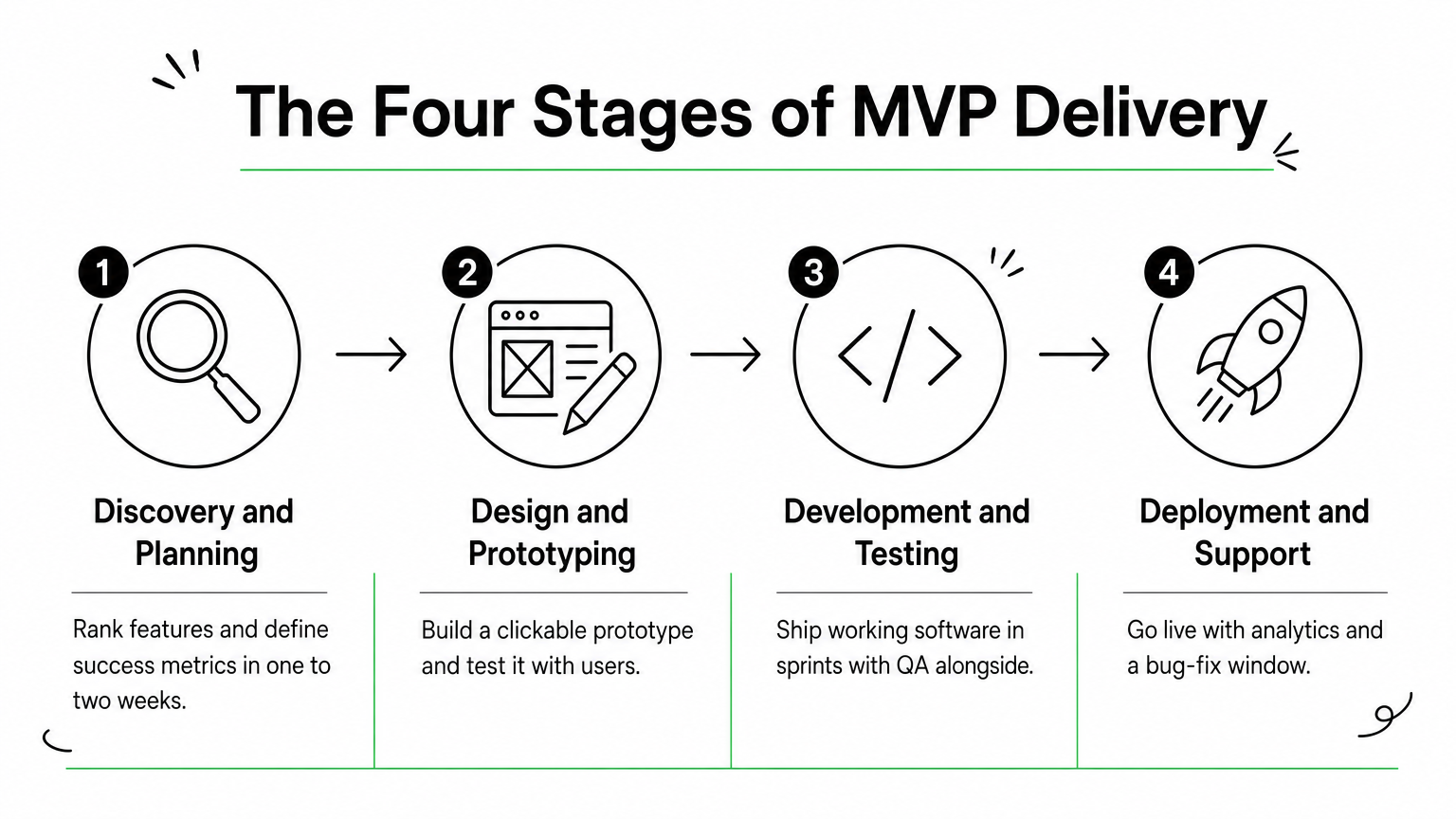
    Good MVP development services follow a fixed sequence, so you always know what is being built and why. We use four stages at Hatzs Dimensions, as laid out in what to expect in the first weeks of an engagement, and most reputable vendors run a close variant. Each one ends with a concrete deliverable you can review.

    Four-step process diagram from discovery to deployment for MVP delivery.

    The four stages and what each produces

    Stage Typical duration What you receive
    Discovery and planning 1 to 2 weeks Ranked feature list, user stories, success metrics, estimate
    Design and prototyping 2 to 3 weeks Wireframes and a clickable prototype tested with users
    Development and testing 4 to 8 weeks Working product built in sprints, QA results
    Deployment and support 1 to 2 weeks, plus a support window Live product, analytics, bug-fix coverage

    Discovery decides more than any other stage. This is where you cut the feature list down to the one workflow worth testing. Design comes next, and a clickable prototype lets you put the product in front of five to ten target users before anyone writes code. Changing a prototype takes hours. Changing shipped software takes weeks.

    If you cannot click through your product every two weeks, you are not seeing progress.

    How development and launch run

    Building happens in one- to two-week sprints. At the end of each sprint, you should see working software in a staging environment, not a slide deck. Testing runs alongside the build, so bugs surface early instead of piling up before launch.

    Release is not the finish line. Your team should deploy to the cloud, switch on analytics and error monitoring, and stay on call for a defined bug-fix window. After that, the real work starts: reading the data and deciding what version two should be.

    Your role during the build

    You have a job in this process too. Name one decision-maker who answers questions within a day, because slow approvals stall more projects than technical problems do. Expect a weekly demo and a shared backlog you can read at any time. If a vendor cannot show you either, treat that as a warning sign before you sign.

    How much MVP development costs

    Price follows scope more than anything else. MVP development services in the USA usually quote against a feature list, so the clearer your list, the tighter your estimate. Treat the ranges below as a planning guide, not a promise.

    Typical price ranges by complexity

    Complexity Example Typical cost Timeline
    Simple One core workflow, one user role, no integrations $30,000 to $60,000 8 to 10 weeks
    Mid-level Web and mobile, payments, admin dashboard, a few integrations $60,000 to $100,000 10 to 14 weeks
    Complex AI features, multiple roles, data pipelines, compliance needs $100,000 to $150,000+ 12 to 16+ weeks

    Most startups land in the middle tier. If your product needs an AI agent or regulated data, plan for the top tier from day one. Compliance work and model testing add real engineering hours that a simple quote often leaves out.

    What moves your price

    Six software development cost factors explain most of the gap between two quotes for the same idea:

    • Feature count: each core workflow adds design, build, and test time.
    • Platforms: web only costs less than iOS, Android, and web together.
    • Integrations: payments, CRM, or ERP connections each add days.
    • AI and data: model work, evaluation, and pipelines raise the effort.
    • Compliance: HIPAA, SOC 2, or PCI requirements add review and documentation.
    • Team seniority and location: US-based senior teams cost more per hour, but they usually ship fewer defects and less rework.

    Scope is the one lever you fully control. Dropping a single secondary workflow can save five figures, and you can add it back after launch once users prove they want it.

    The cheapest quote is rarely the cheapest MVP, because rework is where budgets quietly double.

    Fixed price or dedicated team

    Fixed price suits an MVP with a stable, well-defined scope. You get budget certainty, and the vendor carries the risk of overruns. A dedicated team suits a product that is still changing every few weeks, since you pay monthly and redirect the work as you learn.

    A sealed priced envelope beside a table of laptops representing two engagement models.

    Location matters less than people assume. Searching for MVP development services near me makes sense if you want in-person workshops, but a remote senior team in your time zone delivers the same result. Whichever model you pick, ask for a line-item estimate and a written change-request process, so new costs never appear without your approval.

    How to choose an MVP development company

    Most vendors look alike on their websites. The difference shows up in proof and process, so judge each candidate on evidence you can verify, not on a polished pitch. Plan to compare three vendors side by side before you commit to any of them.

    What to verify before you shortlist

    Seniority comes first. A team of juniors learns on your budget, so ask who will actually write your code and how long each person has shipped production software. Then look for domain proof: case studies in your industry and reviews on independent platforms such as Clutch.

    Use this vendor evaluation checklist to screen every candidate:

    • Portfolio: live products you can open, not mockups.
    • References: two clients who launched an MVP in the past year.
    • Process: a written plan with stages and deliverables, like the four above.
    • Ownership: you own the code and IP from day one.
    • Communication: weekly demos and one named point of contact.

    Questions to ask on the first call

    Ask the vendor what they would cut from your feature list. A team that agrees with every request is not protecting your budget. Then ask about their last project that ran late and why. Honest answers show how they handle problems, which tells you more than a spotless reference list.

    Choose the team that challenges your scope, not the one that nods at everything.

    Press on specifics, too. Can the team show AI work running in production? Will they hand you a line-item estimate? An experienced MVP app development company answers both without hesitation.

    Red flags that should end the conversation

    Walk away if you see a quote with no line items, a promise of a full product in four weeks, or pressure to sign this week. Vague answers about code ownership are another clear warning. Price alone is the weakest reason to pick any provider of MVP development services, because rework costs more than the discount saved.

    Finally, check fit. Whether you hire in the US or abroad, insist on at least four hours of time-zone overlap so questions get answered the same day. Then match the engagement model to your product: fixed price for a stable scope, a dedicated team for one that keeps changing.

    Choosing your next step

    Strong MVP development services come down to three things you can check: a scope cut to one core workflow, a process that shows you working software every two weeks, and a price broken into line items. Get those right and you spend 8 to 16 weeks learning from real users instead of guessing.

    Your next move is simple. Write down the one question your product must answer, list only the features that answer it, and send that list to three vendors. Compare their responses on seniority, proof, and how hard they challenge your scope. The team that pushes back thoughtfully is usually the one protecting your budget.

    If you want a senior-only team to review your idea, talk to Hatzs Dimensions about your MVP. We will help you define the smallest version worth building and give you a clear, line-item plan, with fixed price or dedicated team pricing to match.

  • 7 Best US Mobile App Development Companies to Hire in 2026

    7 Best US Mobile App Development Companies to Hire in 2026

    Picking a US mobile app development company is a high-stakes call. The wrong partner burns six figures, misses launch dates, and hands you code your own team can’t maintain. Plenty of agencies look the same on a landing page. The real differences show up in who actually builds your app, how they price it, and what past clients say after launch.

    This list is built for shortlisting. You’ll find the best mobile app development company options based in the US, with what each one does well, typical cost ranges, and review signals from platforms like Clutch. Expect most serious projects to start around $50,000 and climb past $250,000 for complex, AI-enabled apps.

    Full disclosure: Hatzs Dimensions is one of the seven. We build custom web and mobile apps with a senior-only team, so we know what to ask vendors. Below, each company gets the same treatment: core services, ideal client, pricing signals, and where it may not fit. Use it to cut your list to two or three and start those calls this week.

    1. Hatzs Dimensions

    Services and specialties

    Hatzs Dimensions builds custom web and mobile apps for companies ranging from Series A startups to Fortune 500 teams. The standout is AI built into the product: AI agents, machine learning, and GenAI features that ship inside the app instead of being bolted on later.

    Around that core sit UI/UX design, cloud infrastructure, data engineering, and financial software. Delivery runs in four stages: discovery, design and prototyping, development and testing, then deployment and support. You get one team from strategy to long-term support, which saves you from stitching together three vendors.

    Best for

    This is the right fit when your app depends on data, automation, or compliance. Typical clients come from insurance, healthcare, banking, logistics, and retail, where the app has to connect to legacy systems and satisfy auditors. Hatzs Dimensions also suits teams that are weighing AI governance and readiness before they commit.

    Hatzs Dimensions fits teams whose app depends on AI, data, or compliance, not just good-looking screens.

    Pricing and engagement models

    Expect a scoped quote after discovery, not a published rate card. Two engagement models cover most projects, and choosing the right one matters as much as the hourly rate.

    Model Best when Budget behavior
    Fixed-price project Scope is defined, such as an MVP or a rebuild Cost is set up front
    Dedicated team Roadmap evolves or you need to scale Cost flexes with team size

    Strengths and trade-offs

    Strengths are easy to verify. The team is senior-only with 7+ years of shipping enterprise AI into production, backed by 250+ clients, 100+ specialists, and 98% client retention. Case studies include a 30% cut in insurance operations costs, 300% more lead conversion capacity, and 40% higher customer engagement. Clutch has recognized the company with awards.

    The trade-off is cost. A senior-only model is not the cheapest route for a simple MVP or a template-style app, and a smaller shop may quote less for that. We also run this list, so weigh our entry against the same criteria you apply to the other six.

    2. Zco Corporation

    Services and specialties

    Zco is a New Hampshire company that has built software since 1989. That three-decade track record is rare among app agencies, and its teams handle iOS, Android, and cross-platform builds alongside:

    • AR/VR and game development
    • IoT and connected-device apps
    • AI features, backend, and web work

    Best for

    Mid-sized businesses and funded startups get the most from Zco. It suits end-to-end builds where you want strategy, design, development, and QA from one vendor, especially if you need emerging tech like AR or IoT.

    Teams that only need a few extra developers may find a full-service agency heavier than necessary.

    Zco is a long-tenured, full-service builder, best when you want one vendor to own the whole app.

    Pricing and engagement models

    Zco does not publish rates, so expect a custom quote after a scoping call. Comparable projects usually land in the mid five to low six figures, and larger builds go higher. Ask for two versions of your quote:

    • A fixed-price estimate for a tightly defined MVP
    • A time-and-materials estimate for scope that may shift

    Strengths and trade-offs

    Longevity and breadth are the draw. Few agencies can show 30+ years of delivery across this many platforms, and a mature process means fewer surprises mid-project.

    The trade-off is focus. Zco is a generalist, so AI depth may trail specialists, and a larger agency can put account managers between you and engineers. Ask who will actually write your code.

    3. Dogtown Media

    Services and specialties
    Smartphone, smartwatch, stethoscope, and wireframe notebook arranged on a desk.

    Dogtown Media is a Los Angeles agency founded in 2009. It builds native iOS and Android apps and is best known for digital health products. Its teams also work on:

    • AI and machine learning features
    • Wearables and IoT connections
    • AR/VR and blockchain builds

    Best for

    Startups and health-tech founders get the most from Dogtown. It suits teams that want product strategy alongside development, and companies ready to test emerging tech like wearables or voice interfaces before competitors do.

    Dogtown Media works best when you need a partner to shape a new product idea, not just code a finished spec.

    Pricing and engagement models

    Dogtown does not publish a rate card, so expect a custom quote after discovery. Public agency listings suggest MVPs start in the low to mid five figures, with cost rising as integrations and platforms grow. Confirm the numbers on your own scoping call. Ask for:

    • A phased estimate, so you can launch an MVP first
    • A clear split between design, build, and post-launch support

    Strengths and trade-offs

    Over 15 years in business gives Dogtown a mature process and real depth in regulated health apps. It also publishes a lot of educational content, which shows how the team thinks.

    The trade-off is scale. Dogtown is a boutique, so large enterprise rollouts with heavy legacy integration may stretch it. Check who staffs your project, and whether your app’s compliance needs, such as HIPAA, are covered in writing.

    4. WillowTree

    Services and specialties

    WillowTree is a Charlottesville, Virginia firm founded in 2007, and it is now part of TELUS Digital. It builds iOS, Android, and web apps for large consumer brands, with a growing focus on AI and data work. Core offerings include:

    • Product strategy and UX design
    • Native mobile engineering
    • Machine learning and GenAI features

    Best for

    Enterprise product teams get the most from WillowTree. It suits brands that need a large, polished consumer app and a partner that can staff multiple squads at once.

    WillowTree fits enterprises that want a design-led team to scale a consumer app, not a bargain MVP.

    Startups with a tight MVP budget will likely find the process and price heavier than they need.

    Pricing and engagement models

    Rates are not published, so expect a custom quote after discovery. Given its client profile, budgets typically sit in the six-figure range and up. Ask for:

    • A scoped estimate for one release
    • Team composition and seniority by role

    Strengths and trade-offs

    Design and engineering quality are the draw. Nearly two decades of work and a strong enterprise client roster show it can run complex, high-traffic apps. TELUS Digital backing adds scale.

    Cost is the trade-off. WillowTree is priced for enterprise budgets, and because of its parent company you should ask whether the team stays dedicated to your project from kickoff to launch.

    5. ArcTouch

    Services and specialties

    ArcTouch is a San Francisco agency founded in 2009. It builds iOS and Android apps and stands out for work beyond the phone screen, including:

    • Voice assistants and conversational interfaces
    • Connected TV and wearable apps
    • AI and GenAI features inside mobile products

    Best for

    Mid-market and enterprise brands get the most from ArcTouch. It suits teams planning a multi-platform product, such as a mobile app that also ships on TV or voice, and companies that want design-led strategy before any code gets written.

    ArcTouch fits brands that need one app experience to work across phone, TV, and voice.

    Founders with a one-screen MVP and a small budget will usually move faster with a leaner shop.

    Pricing and engagement models

    ArcTouch does not publish rates, so expect a custom quote after discovery. Based on its client profile, projects typically land in the six-figure range, so confirm the numbers on your own scoping call. Ask for:

    • A phased estimate that lets you launch one platform first
    • A retainer option for post-launch updates

    Strengths and trade-offs

    Mobile focus is the draw. More than 15 years of app-only work, strong UX craft, and solid review scores on Clutch make it a safe pick for polished consumer products.

    The trade-off is team location. A meaningful share of ArcTouch engineering sits in Brazil, so check time zone overlap and whether your data-handling rules allow it. Also confirm how deep the AI bench goes if intelligence is central to your app.

    6. Simpalm

    Services and specialties

    Simpalm is a US mobile app development company based near Chicago and founded in 2009. It builds iOS, Android, and cross-platform apps using a hybrid model that pairs US project leads with offshore engineers. Core work includes:

    • Enterprise mobility and custom business apps
    • IoT and wearable integrations
    • AI and chatbot features

    Best for

    Small and mid-sized businesses get the most from Simpalm. It suits teams that want US-based project management at a lower blended rate than onshore-only agencies, such as an internal workflow app or a first customer-facing release.

    Simpalm fits budget-aware teams that want US oversight without a fully onshore price tag.

    Pricing and engagement models

    Rates are not published, so expect a custom quote after scoping. Agency directories typically list hourly rates in the $25 to $49 range, and simple MVPs can start in the low five figures. Confirm these numbers on your own call. Ask for:

    • A fixed-price estimate for a defined MVP
    • A dedicated-developer option for ongoing work

    Strengths and trade-offs

    Value is the draw. More than 15 years in business, broad platform coverage, and lower rates make Simpalm a practical choice for straightforward apps and internal tools.

    The trade-off is distance. Much of the engineering is offshore, so check time zone overlap and whether your data-handling requirements allow it. Ask who writes your code, and how senior those engineers are, before you sign.

    7. Chop Dawg

    Services and specialties
    Desk with app screen sketches, sticky notes, and a phone showing a prototype.

    Chop Dawg is a US studio built around startups and first-time founders. It builds iOS, Android, and web apps, with a heavy emphasis on MVP development, meaning a lean first version you can put in front of real users. Typical work covers:

    • Product discovery and UX design
    • Native and cross-platform app builds
    • Backend, APIs, and post-launch support

    Best for

    Founders with an idea and no in-house engineers get the most from Chop Dawg. It suits early-stage startups that want a studio to help define scope and launch a first release fast. Enterprise teams with legacy systems or strict audit requirements will likely want a larger partner.

    Chop Dawg works best when a founder needs a partner to turn an idea into a testable first release.

    Pricing and engagement models

    Rates are not published, so expect a custom quote after a scoping call. Startup-style MVPs from studios like this usually fall in the mid five figures, though your features and platforms will move that number. Confirm it on your own call. Ask for:

    • A fixed scope and price for the MVP
    • Full ownership of your source code and developer accounts

    Strengths and trade-offs

    Startup focus is the draw. A studio that ships first versions often can keep scope tight and help you avoid paying for features users never asked for.

    The trade-off is scale. Chop Dawg is a smaller shop, so large enterprise rollouts and deep AI work may stretch it. Ask how it handles security and compliance, and what support looks like once your user base grows.

    8. How we chose these companies and what apps cost

    How we chose them

    Every company here is a US-based agency with a public record of shipped iOS and Android apps. We compared them on four points:

    • Service breadth, from MVPs to AI features
    • Review signals on Clutch and similar platforms
    • Team model, onshore or hybrid
    • Fit for a specific buyer, such as founders or enterprise teams

    Most agencies don’t publish rates, so pricing figures are estimates from public listings and client profiles. Confirm each one on a scoping call before you budget around it.

    What apps cost

    Budget follows complexity more than platform. A simple MVP can cost less with a hybrid team, but a US-built, production-grade app usually falls into these bands:
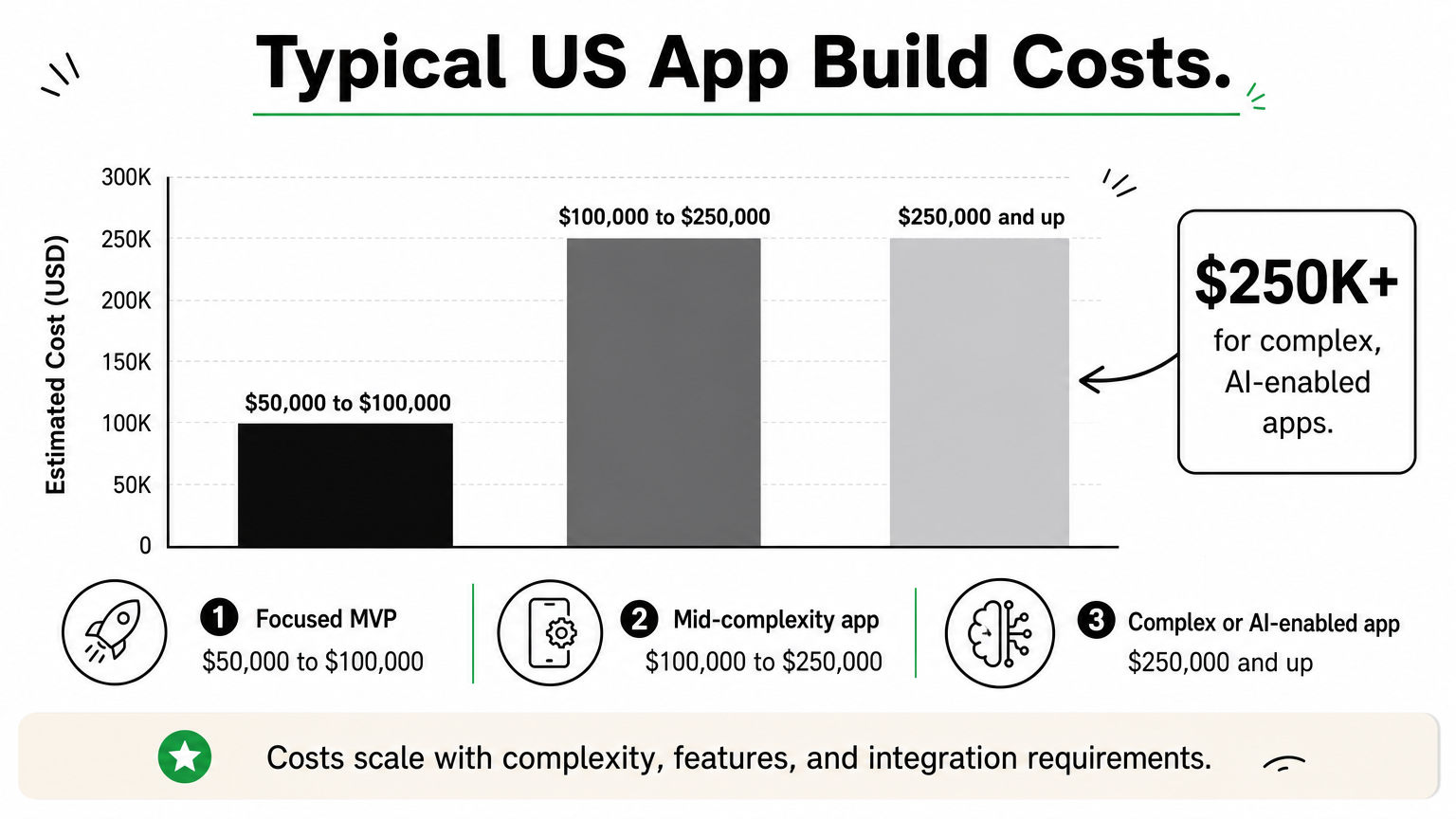
    Bar chart comparing typical US mobile app costs for MVP, mid-complexity, and AI-enabled apps.

    App type Typical range Example
    Focused MVP $50,000 to $100,000 One platform, core features, basic backend
    Mid-complexity app $100,000 to $250,000 iOS and Android, integrations, admin tools
    Complex or AI-enabled app $250,000 and up Legacy systems, compliance, ML or GenAI features

    Integrations, compliance work, and AI features push software development cost up fastest. Ask for a phased estimate so you launch small, then fund the next release with what real users teach you.

    Scope, not platform, drives what your app costs, so define the first release before you ask for quotes.

    9. How to pick the right company for your app

    Match the company to your app

    Start with your app, not the agency. The best mobile app development company for you is the one whose strengths match your scope, budget, and risk. A founder with a first idea needs a different partner than a bank rebuilding its customer app.

    Use this map as a first filter:

    Your situation Strongest fits
    AI, data, or compliance-heavy app Hatzs Dimensions
    First MVP on a tight budget Chop Dawg, Simpalm
    Health or emerging-tech product Dogtown Media
    Large consumer or multi-platform app WillowTree, ArcTouch
    Full-service build with AR or IoT Zco Corporation

    Questions to ask before you sign

    Then test your shortlist against a guide to choosing a software development company. Put the same questions to every finalist and compare the answers side by side. Vague replies are a warning sign, and slow replies during sales rarely speed up after you sign.

    • Who will write my code, and how senior are they?
    • Can I speak with two clients whose apps are live?
    • Do I own the source code and developer accounts?
    • How do you handle security, compliance, and post-launch support?

    Ask who actually builds your app, and get the answer in writing.

    Finally, reduce risk with a paid discovery phase before you commit to a full build. A few weeks of scoping and prototyping shows you how the team communicates, and it gives you a realistic estimate you can compare across vendors.

    Choosing your app partner

    The right US mobile app development company is the one that fits your scope, not the one with the loudest brand. Each of the seven earns its place for a different buyer: Chop Dawg and Simpalm for lean MVPs, Dogtown Media for health products, WillowTree and ArcTouch for large consumer apps, Zco for full-service builds, and Hatzs Dimensions for AI, data, and compliance-heavy apps.

    Before you sign with anyone, confirm who writes your code and that you own the source. Then run a paid discovery phase. Those checks protect you better than any ranking, including this one.

    When you’re ready to compare real numbers, talk to Hatzs Dimensions about your mobile app. Bring your scope, your budget, and your hardest questions, and we’ll give you a straight answer.
  • Custom Mobile App Development: What It Is and How It Works

    Custom Mobile App Development: What It Is and How It Works

    Off-the-shelf apps force your business to bend around someone else’s workflow. Your checkout process, your compliance rules, your field team’s routines get squeezed into a template that was never built for them. That gap is exactly why custom mobile app development exists, and why so many CTOs and founders end up searching for it once a generic app hits its limits.

    At its core, custom mobile app development means building software from scratch around your specific business logic, users, and systems, rather than configuring a pre-built product. It covers everything from discovery and architecture planning to design, engineering, and long-term support, and it applies whether you’re a startup shipping a first product or an enterprise modernizing legacy systems. The right approach also determines how well your app scales, integrates with your existing stack, and holds up under real user load.

    In this article, we’ll break down what custom development actually involves, how the process works step by step, and what separates custom enterprise mobile app development from smaller-scale builds. We’ll also cover how to evaluate a development partner and what results you should realistically expect.

    Why custom mobile app development matters for your business

    Businesses adopt custom mobile app development because generic software eventually collides with how their operations actually work. A retail chain’s inventory sync, a logistics company’s routing rules, a healthcare provider’s compliance requirements: none of these fit neatly into a one-size-fits-all app. When you build around your own workflows instead of adapting to someone else’s, you remove the friction that slows teams down and frustrates customers.

    A retail worker uses a custom inventory app on a tablet near store shelves.

    Where off-the-shelf apps start costing you

    Off-the-shelf platforms look cheap and fast at first, but the bill comes due later, which is why it pays to work through the build vs. buy decision honestly. You hit licensing limits on user counts or API calls, plugin conflicts break features overnight, and every workaround adds technical debt that someone eventually has to untangle. Teams end up building manual processes around the software’s gaps, which defeats the purpose of automating anything in the first place.

    A generic app that fights your workflow every day is more expensive than a custom one that fits it once.

    What a tailored build gives you back

    Custom-built software gives you full ownership of the codebase, the data, and the roadmap. Nobody can force a pricing change, deprecate a feature you depend on, or sunset the product entirely. That control matters most for companies running regulated operations or handling sensitive customer data, where every integration and access point needs to be accounted for.

    A tailored approach typically delivers:

    • Direct integration with your existing CRM, ERP, or legacy databases instead of brittle middleware
    • Workflow automation built around your actual approval chains and business rules
    • Scalability engineered for your real user load, not a generic ceiling
    • Security and compliance controls mapped to your industry’s specific requirements
    • Faster iteration since you control the release schedule, not a third-party vendor

    The business case in numbers

    Results from real deployments make the case better than theory does. Across client engagements, custom mobile app development solutions have driven measurable operational gains rather than just aesthetic improvements:

    Business area Typical outcome after custom build
    Insurance operations Up to 30% lower operating costs
    Sales and lead handling Up to 300% increase in conversion capacity
    Customer engagement Up to 40% higher engagement rates

    Gains like these come from removing manual steps and building features around actual user behavior, not from a bigger app store rating. You can see how this plays out across industries in our case studies, where the same pattern repeats: teams that outgrow generic tools recover both time and revenue once the software finally matches how they work.

    How custom mobile app development works from discovery to launch

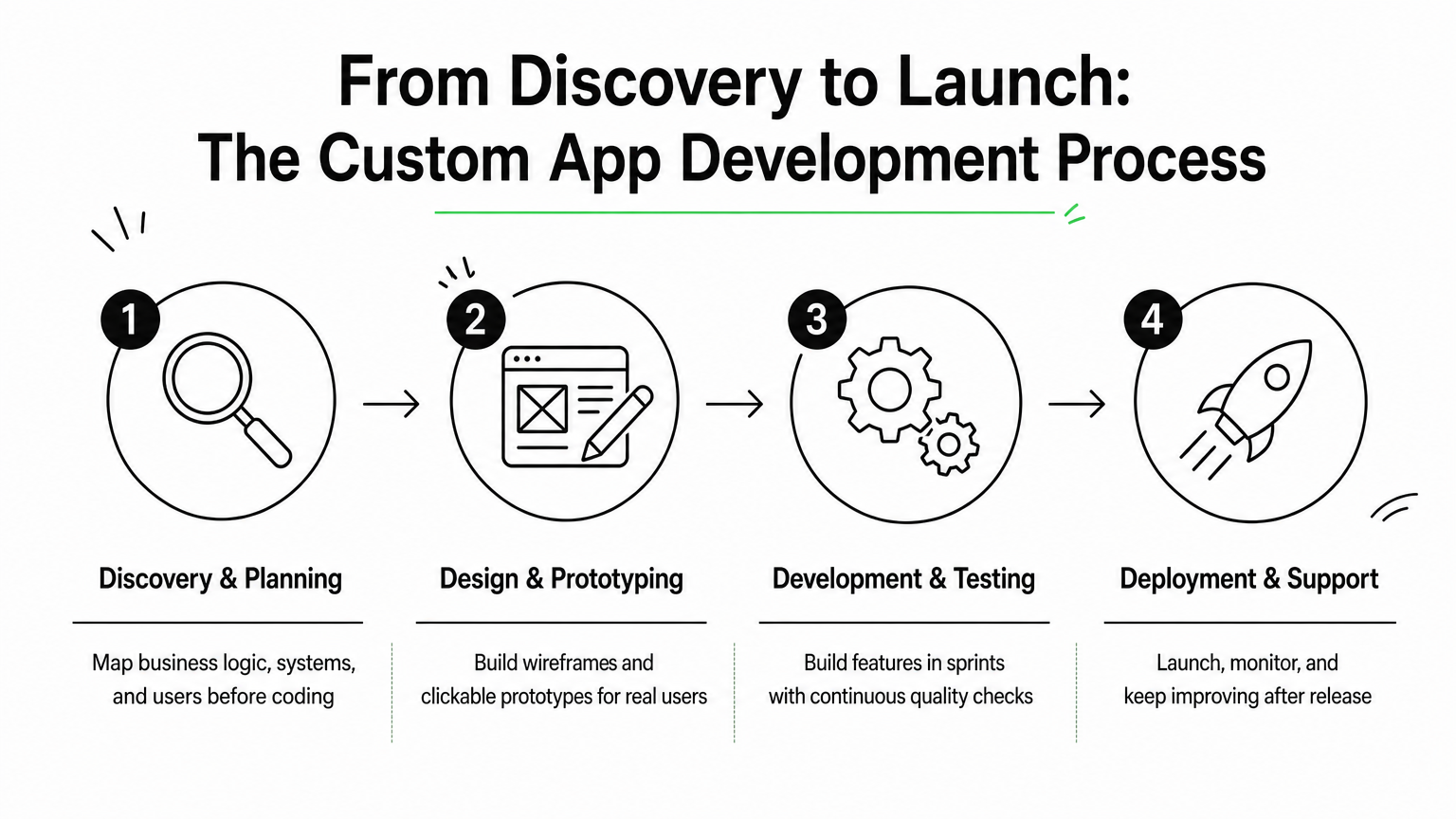
    Every serious build follows a similar arc, whether you’re a five-person startup or a Fortune 500 team modernizing a legacy system. The names change from vendor to vendor, but the sequence doesn’t: you validate the idea, design around real users, build and test in cycles, then launch and keep improving. Skipping any of these stages is usually where projects go over budget or ship features nobody uses.

    A four-step infographic showing discovery, design, development, and deployment stages of app building.

    Discovery and planning

    Discovery is where a development partner maps your business logic, existing systems, and user needs before writing a line of code. This phase should produce a technical scope, an architecture plan, and a realistic timeline, not just a slide deck. Requirements gathering at this stage prevents the most expensive mistake in software: building the wrong thing efficiently.

    Skipping discovery doesn’t save time, it just moves the delay to the middle of the build.

    Design and prototyping

    Once the scope is locked, designers translate requirements into wireframes and clickable prototypes. This is where UI/UX design earns its keep: catching a confusing checkout flow or a clunky field-worker screen here costs a design revision, not a rebuild. Our UX and UI design consultancy work happens in parallel with early architecture decisions so both teams stay aligned.

    Development and testing

    Engineering teams typically work in two-week sprints, building features in order of business priority rather than all at once. Automated and manual quality assurance testing runs continuously alongside development, not as a final gate before launch. This is also when integrations with your CRM, ERP, or payment systems get built and stress-tested against real data volumes.

    Deployment and ongoing support

    Launch isn’t the finish line. A proper deployment includes app store submission, server provisioning, and monitoring setup so issues surface before users report them. Post-launch, ongoing support means shipping updates, patching vulnerabilities, and adjusting features as your business changes. Companies that treat launch as the end of the relationship usually end up rebuilding within two years, because the app never adapted to new requirements.

    Native, hybrid, or cross-platform: choosing your build approach

    Picking a build approach is a technical decision with real budget consequences, and like deciding which platform to target first, it should happen during discovery, not after your first sprint. Native development means writing separate codebases in Swift for iOS and Kotlin for Android, which gives you the best performance and full access to device features like camera, GPS, and biometrics. Cross-platform frameworks like React Native or Flutter let you share one codebase across both platforms, cutting build time and cost while still producing near-native performance for most business apps.

    Where each approach actually fits

    Hybrid apps, built with web technologies wrapped in a native shell, sit at the cheapest end but struggle with complex animations, offline functionality, and heavy device integration. They fit simple internal tools or MVPs where speed to market matters more than polish, much like a progressive web app does for mobile web experiences. Cross-platform frameworks now handle most enterprise use cases well, including apps with camera access, push notifications, and offline sync, which is why they’ve become the default choice in custom mobile app development solutions aimed at startups and mid-sized companies alike.

    The right build approach isn’t the most powerful one, it’s the one that matches your users, timeline, and budget.

    Comparing the three approaches

    Approach Best for Trade-off
    Native (Swift/Kotlin) High-performance apps, heavy device integration, gaming Two codebases, higher cost and timeline
    Cross-platform (React Native, Flutter) Most business apps, faster time to market Slight performance gap for graphics-heavy features
    Hybrid (web-based shell) Simple MVPs, internal tools, low budget Weak offline support, limited device access

    Enterprises running apps with heavy real-time data, AR features, or hardware integrations, think field service scanners or medical devices, usually still need native builds despite the added cost. Startups validating a market fit almost always come out ahead choosing cross-platform, since it lets them test the concept across both app stores without doubling engineering spend. Our teams at Hatzs Dimensions evaluate this trade-off during discovery, using your user base and feature roadmap, not a default preference, to make the call.

    What custom mobile app development really costs

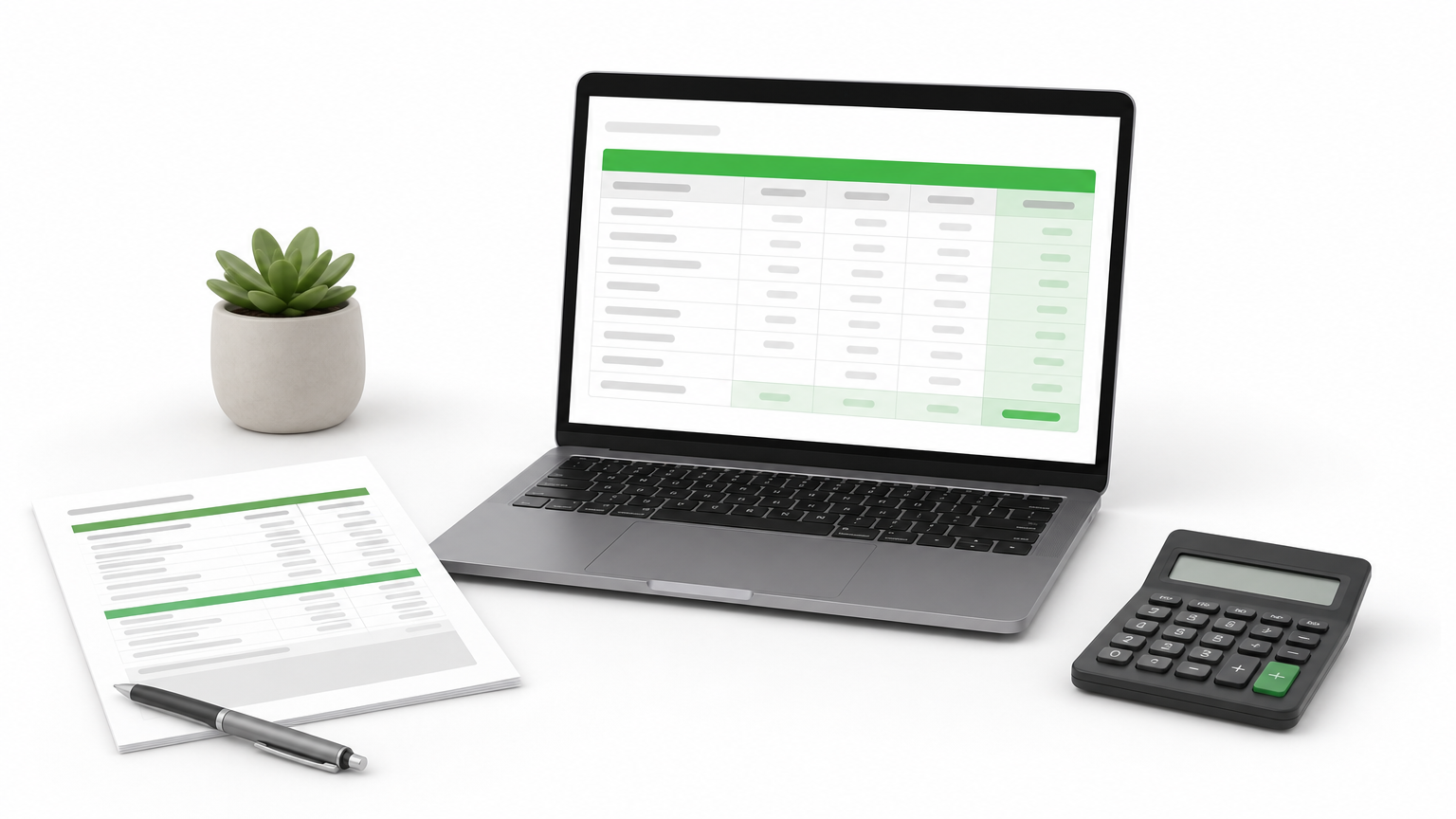
    Cost is the question every founder and CTO asks first, and the honest answer is: it depends on scope, not on a fixed price list, as our breakdown of what drives software development cost explains. Custom mobile app development services typically range from $30,000 for a simple MVP to well over $500,000 for a full enterprise platform with multiple integrations, custom AI features, and compliance requirements. Vendors who quote a flat number before discovery either haven’t scoped your project properly or are padding the estimate to cover surprises later.

    A laptop and printed documents show a budget spreadsheet and calculator for app cost planning.

    Where the budget actually goes

    Discovery and design usually consume 15-20% of total budget, engineering takes the largest share at 50-60%, and testing plus deployment fills out the rest. Backend complexity drives cost more than the interface does: a simple booking app with one database is cheap, but an app syncing real-time inventory across five warehouses is not. Third-party integrations, each API connection, each legacy system handshake, add both time and long-term maintenance cost that many quotes leave out entirely.

    The cheapest quote almost never becomes the cheapest app once you count the rebuild.

    Typical cost ranges by project type

    Project type Typical cost range Timeline
    Simple MVP (single platform) $30,000 – $80,000 2-4 months
    Mid-size business app (cross-platform) $80,000 – $250,000 4-8 months
    Enterprise app (multiple integrations, AI features) $250,000 – $500,000+ 8-14 months

    Engagement models change the math

    Fixed-price models suit projects with a locked scope, like a defined MVP with a clear feature list, since you know the total cost upfront. Dedicated team models fit longer-term builds where requirements evolve, letting you scale engineers up or down as priorities shift without renegotiating a contract every sprint. Growth-stage companies pursuing custom mobile app development for startups often start fixed-price to prove the concept, then shift to a dedicated team once the product finds traction and the roadmap gets less predictable. You can review both models on our software development pricing and engagement models page before scoping your own project.

    How to choose the right development partner

    Selecting a vendor is the decision that determines whether your budget turns into a working product or a stalled contract. Look for a senior-only engineering team with a track record of shipping enterprise-grade systems into production, not a roster padded with junior developers learning on your project. Ask for case studies in your specific industry, since a team that’s solved healthcare compliance or logistics routing before will spot problems you haven’t thought of yet, and run them through a proper checklist for evaluating a development company.

    What separates a real partner from a vendor

    Genuine partners push back on your assumptions during discovery instead of just building whatever you ask for. Reputation matters here too: a company recognized on platforms like Clutch or backed by client retention above 90% has already survived the scrutiny you’re about to apply. Retention numbers tell you more than marketing copy does, because unhappy clients don’t stick around for a second project.

    The best development partner argues with you before the build starts, not after launch fails.

    Questions worth asking before you sign

    Run every shortlisted vendor through the same checklist so you’re comparing apples to apples:

    • Do they offer both fixed-price and dedicated team models, or only one rigid structure?
    • Can they show a live app they built, not just a case study slide?
    • Who owns the code and IP after the contract ends?
    • What does post-launch support actually include, and for how long?
    • Do they have in-house AI, data, and cloud expertise, or will they subcontract it?

    Startups evaluating custom mobile app development solutions should also check how a vendor scales a team as the roadmap grows, since the agency that ships your MVP well isn’t always equipped to support you three years later. Teams like ours at Hatzs Dimensions combine engineering, AI, data, and cloud specialists under one roof specifically so you’re not stitching together three vendors as your product matures. That structure matters more once you’re past the first release and into the harder work of scaling.

    Putting it all into perspective

    Custom mobile app development isn’t a luxury reserved for enterprises with unlimited budgets. It’s the practical answer once a generic tool starts costing you more in workarounds than a tailored build would cost outright. The process itself is predictable: discovery, design, development, and support, each stage protecting you from the expensive mistakes that come from skipping ahead. Your build approach, your budget, and your choice of partner all flow from decisions made honestly during those early conversations, not from a template pulled off a shelf.

    If you’re weighing whether a generic platform can still carry your business, or you already know it can’t, the next step is a real scoping conversation, not another demo. Talk to a team that’s shipped enterprise-grade apps into production for 250+ clients and can tell you within weeks what yours actually requires. Get in touch with the iOS and Android app development team at Hatzs Dimensions to start scoping your project properly.

  • Web vs Mobile: Which Platform Should Your Next Project Target First?

    Web vs Mobile: Which Platform Should Your Next Project Target First?

    In today’s digital-first world, businesses face a crucial question before launching any new product or service: Should we start with a website or a mobile app?

    It’s not just a matter of preference anymore, it’s a strategic decision that impacts your reach, engagement, and growth potential. Both web and mobile platforms offer unique advantages, and the right choice depends on your goals, target audience, and the kind of experience you want to create.

    Whether you’re a startup, entrepreneur, or established brand, understanding how to balance web presence with app functionality can set the tone for your digital success. Let’s break it down.

    The Web Advantage: Accessibility and Reach

    When it comes to getting your project off the ground quickly, web platforms often lead the way. A website is accessible to anyone with an internet connection, no downloads, no storage space concerns, and no platform limitations.

    1. Broader Audience Reach

    Web platforms allow users across devices, desktops, tablets, and smartphones, to access your product instantly. This is particularly beneficial if your goal is brand visibility, SEO growth, or testing your concept before investing in a full-scale app.

    2. Easier Updates and Maintenance

    Updating a website is fast and universal. When changes go live, every user sees them instantly, no app store approvals or user updates required. For businesses that need agility, this is a huge plus.

    3. Cost-Effective Development

    For many brands just starting out, web development is more budget-friendly. While mobile app development services can bring a polished user experience, the initial investment and maintenance can be higher. Launching on the web first gives you a way to validate your idea with less financial risk.

    The Mobile Advantage: Engagement and Personalization

    While the web excels in reach, mobile platforms dominate when it comes to engagement. People spend the majority of their online time inside apps, making mobile a prime space for building strong customer relationships.

    1. Optimized User Experience

    Mobile apps are designed for speed, convenience, and immersion. With features like push notifications, offline access, and personalized interfaces, they offer a more seamless experience than most websites can deliver.

    This is where mobile app development services truly shine, by modifying the app’s design and performance to fit users’ behaviors, preferences, and devices. A smooth and responsive app encourages repeat visits and long-term loyalty.

    2. Direct Access to Device Features

    Mobile apps integrate directly with smartphone features like cameras, GPS, and biometric authentication. This makes it easier to build interactive experiences, think navigation, photo uploads, or secure payments. Such integrations simply aren’t as fluid on a web browser.

    3. Brand Loyalty and Retention

    Having your app icon on a user’s home screen creates a powerful sense of brand presence. When supported by smart notifications and personalized offers, mobile apps help foster deeper engagement than a typical website visit.

    For businesses looking to create meaningful, lasting relationships with their audience, investing in professional mobile app development services can yield significant long-term returns.

    How to Decide Which Platform Comes First

    The ideal platform for your project depends on your business goals, target audience, and available resources. Here are a few guiding factors to consider before making the decision:

    1. Audience Behavior

    If your audience is more likely to use desktops or is spread across various devices, a web-first approach makes sense. But if your users are mobile-first, such as e-commerce shoppers or service app users, then developing a mobile app should take priority.

    2. Budget and Resources

    Launching a mobile app often requires more upfront investment in design, development, and testing. On the other hand, a website can act as an affordable entry point, allowing you to gauge user interest before scaling up with mobile app development services.

    3. Long-Term Goals

    If your goal is to build brand recognition and attract organic traffic, a strong web presence is key. But if you’re aiming for high engagement, recurring users, and premium features like offline mode or push notifications, a mobile app should lead your roadmap.

    4. Development Timeline

    Web projects can typically go live faster than apps since they don’t require app store submissions or complex native builds. If speed-to-market is critical, start with the web, then expand using mobile app development services once you’ve validated your idea.

    The Hybrid Approach: Best of Both Worlds

    Why choose just one? Many successful brands opt for a hybrid strategy, launching both a web version and a mobile app, each serving a distinct purpose.

    You might start with a responsive website to build brand awareness and attract users, then develop a mobile app to deepen engagement and loyalty. With modern mobile app development services, it’s possible to integrate data and user experiences seamlessly across both platforms.

    Progressive Web Apps (PWAs) are another smart middle ground. They combine the accessibility of a website with the usability of an app, offering offline functionality and app-like performance, without requiring users to download anything.

    Conclusion: Choosing the Right Path for Your Project

    There’s no one-size-fits-all answer to the Web vs Mobile debate, it all comes down to your audience, objectives, and resources.

    A web platform gives you reach, flexibility, and cost efficiency. A mobile app delivers engagement, personalization, and loyalty. The smartest choice often lies in starting where your users are today and growing toward where they’ll be tomorrow.

    Whether you’re testing an idea or scaling a full-fledged digital experience, partnering with the right mobile app development services can help you build intuitive, powerful, and user-centered applications that stand out in the market.

    Your digital journey starts with one decision, so make it strategically. Choose the platform that not only fits your vision but also evolves with your users’ needs.