Author: HATZS Editorial Team

  • AI Strategy for Executives: How to Move From Hype to Real Business Impact

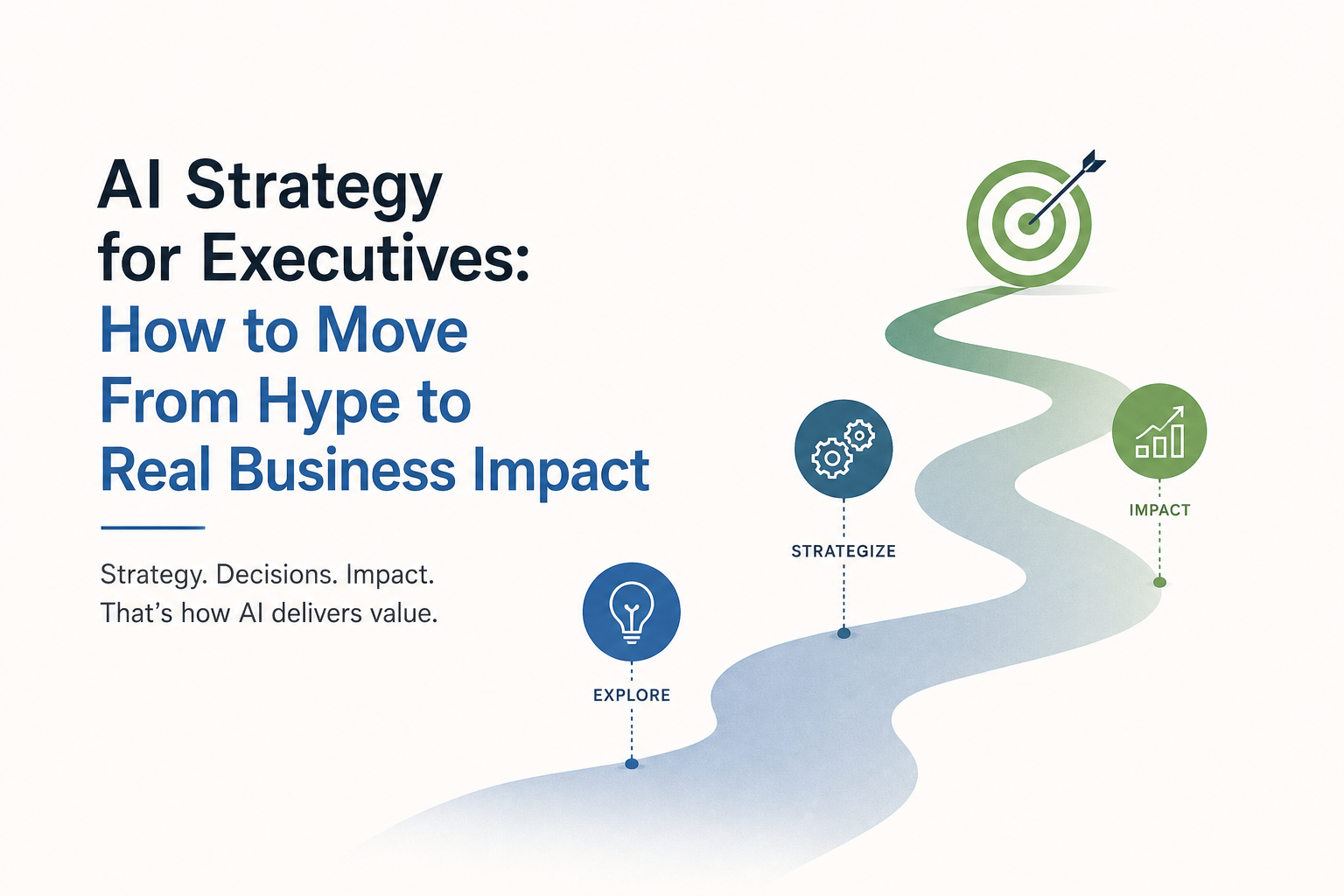
    AI Strategy for Executives: How to Move From Hype to Real Business Impact

    Let’s be honest about where most companies actually are with AI right now.

    You’ve approved a few pilots. Your teams are using ChatGPT, Copilot, or something similar. There’s probably a slide in your last board deck with “AI strategy” somewhere in the title. And yet, when someone asks what AI is actually doing for the business — the concrete, measurable kind of doing — the answer gets fuzzy fast.

    You’re not alone. Most organizations are stuck in what I call the adoption gap: AI is present, but it isn’t yet strategic. The gap between deploying AI tools and extracting real business value from them is where most executive energy should be focused right now. And it’s not a technology problem — it’s a leadership one.


    The Pilot Trap

    Here’s a pattern that plays out constantly: a team runs an AI pilot, it works reasonably well, leadership celebrates the win, and then… nothing scales. Six months later, the same organization is running three more pilots in different departments, none of which are connected, and still can’t point to a meaningful line on a P&L.

    The pilot trap happens when AI adoption is driven by curiosity rather than strategy. Pilots are valuable — they test assumptions, build internal capability, and create proof points. But a portfolio of pilots is not a strategy. At some point, leadership has to make the call: which of these bets do we scale, which do we kill, and what does AI actually mean for how we compete?

    That call is a business decision, not a technology decision. Which is exactly why it belongs in the room you’re sitting in.


    What “AI Strategy” Actually Means

    There’s a lot of noise around this phrase, so let’s simplify it.

    An AI strategy answers three questions:

    Where does AI create disproportionate value for our specific business? Not AI in general — AI in your context, with your data, in your competitive landscape. A logistics company and a professional services firm have very different answers here.

    What do we need to build, buy, or change to capture that value? This is the operational side: data infrastructure, talent, vendor relationships, process redesign. Most organizations underestimate how much non-AI work is required to make AI work well.

    How will we know if it’s working? AI investments need success metrics tied to business outcomes, not technology outputs. “We deployed a model” is not a metric. “We reduced customer churn by 8% in the segments where the model runs” is.

    If your organization can answer all three questions clearly, you have a strategy. If the answers are vague or vary depending on who you ask, you have a direction, which is a start — but it needs to become something more concrete.


    The Decisions Only You Can Make

    One of the most common mistakes I see is executives treating AI adoption as something to delegate entirely. Hand it to IT, hire a Chief AI Officer, let the innovation team figure it out. The thinking goes: this is technical, so technical people should own it.

    The problem is that the highest-stakes AI decisions aren’t technical at all. They’re about risk tolerance, competitive positioning, and values. Consider:

    • Which decisions are you willing to let AI make autonomously, and which ones require a human in the loop?
    • If your AI system produces a result that turns out to be wrong, who is accountable — and what’s the remediation path?
    • Are there customer-facing use cases where using AI might be effective but would feel wrong to your customers if they knew about it?

    These questions don’t have technical answers. They require judgment about what kind of company you want to be, what your customers expect, and how much risk is appropriate given the upside. That’s leadership work, and it can’t be delegated.


    Three Practical Things to Do in the Next 90 Days

    If you’re a C-suite leader who wants to move from good intentions to actual traction with AI, here’s a practical starting point.

    1. Get a real inventory of what’s running. Before you build anything new, understand what you already have. How many AI tools are active across your organization? Which teams are using them? What data are they touching? You may be surprised — and in some cases, concerned — by the answer. This isn’t a witch hunt; it’s a baseline. You can’t govern or scale what you haven’t mapped.

    2. Pick one high-value problem and go deep. Rather than spreading investment across five “exploration” efforts, identify one business problem where AI could create significant, measurable impact — and resource it properly. Give it dedicated ownership, clear success metrics, and a realistic timeline. Breadth feels innovative; depth actually delivers.

    3. Have the accountability conversation. For every AI system your organization runs, there should be a named individual — not a team, not a committee — who is accountable for its outputs. If something goes wrong, who calls it and who fixes it? That clarity doesn’t slow you down. It’s what lets you move quickly without flying blind.


    On the “We’ll Figure It Out Later” Approach

    There’s a natural temptation to move fast and deal with governance, accountability, and strategy later — once you’ve proven the technology works. The logic seems reasonable: why slow down to build infrastructure for a bet that hasn’t paid off yet?

    Here’s the practical problem: later is expensive. When you build accountability and oversight into AI systems after they’re running in production, you’re not adding structure to an empty foundation — you’re retrofitting it into decisions that have already been made, processes that have already changed, and outputs that have already influenced outcomes. That work costs significantly more in time and money than building it right the first time.

    The organizations that are scaling AI most effectively right now aren’t moving recklessly fast. They’re moving with intention — deploying quickly into well-defined problem areas, with clear ownership, real metrics, and a short feedback loop. Speed and discipline aren’t opposites in AI adoption. They’re what each other requires.


    The Competitive Reality

    AI adoption is not going to be a differentiator forever. Right now, there’s still meaningful separation between organizations that are using AI strategically and those that are still in “exploratory mode.” That window is closing. Within two to three years, the baseline expectation in most industries will be that AI is embedded in core operations — customer service, forecasting, risk management, product development.

    The question isn’t whether AI will be part of how your business runs. It’s whether you’ll have built the capability, the data infrastructure, and the organizational habits to use it well before your competitors do.

    That’s not a technology question. That’s a strategy question. And it’s yours to answer.


    The best place to start is a clear-eyed assessment of where you are today — not where your roadmap says you should be. What does AI actually do for your business right now, and what would it need to do differently to matter at the level you’re planning for?


  • The Role of UI/UX Design in Boosting Conversion & Retention for SaaS Products

    The Role of UI/UX Design in Boosting Conversion & Retention for SaaS Products

    When users land on a SaaS platform, they expect clarity and an experience that makes their tasks easier, not harder. In today’s digital world, people quickly abandon products that feel confusing or overwhelming. That’s where strong UI/UX design steps in. The right design can simplify workflows, reduce friction, boost engagement, and most importantly, increase conversions and customer retention. It’s no surprise that more SaaS founders and product teams now prioritize ui ux design services right from the development stage. 

    In this blog, we’ll break down why UI/UX matters so much, how it influences user behavior, and what businesses should focus on to maximize success.

    Why UI/UX Design Has Become Essential for SaaS Growth

    SaaS users don’t just want functionality, they want an intuitive and enjoyable experience. With high competition and countless alternatives available, platforms need to deliver more than features. They must offer ease, flow, and clarity. Thoughtfully executed ui ux design services play a major role in crafting this experience.

    User Expectations Are Higher Than Ever

    Users compare every digital experience to the best apps they’ve ever used, even if those apps are from completely different industries. If a SaaS platform feels clunky or slow, users lose patience. They expect:

    • Clean interfaces
    • Quick loading times
    • Simple navigation
    • Seamless workflows

    Meeting these expectations requires strategic UX thinking, not just good development.

    A Good Experience Builds Trust

    Users are more likely to convert when they feel confident navigating a platform. A strong UI builds visual trust, while a strong UX builds functional trust. Together, they reduce hesitation and increase sign-ups. This is why many companies invest early in ui ux design services—it shapes the first impression and long-term perception of the product.

    How UI/UX Design Drives Higher Conversions

    Conversion doesn’t just depend on pricing or features. Often, it depends on how easy it is for a user to take the next action. That’s what UI/UX optimizes.

    Clear User Journeys Reduce Drop-Off

    When a SaaS product is designed around the user’s goals, it becomes easier for them to complete tasks. Whether it’s signing up, activating a feature, or upgrading a plan, clarity drives action. Good UX provides:

    • Guided flows
    • Visual cues
    • Intuitive layouts

    Through purposeful ui ux design services, businesses can simplify every touchpoint that leads to conversion.

    Optimized Onboarding Boosts Sign-Up Success

    Onboarding is often the make-or-break moment. If users don’t understand how the product benefits them within minutes, they may never return. Strong onboarding UX:

    • Highlights value quickly
    • Reduces initial confusion
    • Helps users reach activation faster

    A seamless onboarding experience can significantly increase free-to-paid conversion rates.

    Why UI/UX Design Is a Major Driver of Retention

    Converting a user is one thing—keeping them is another. Retention comes from long-term ease of use and satisfaction, which rely heavily on UX.

    Consistency Keeps Users Comfortable

    When a product feels predictable and consistent, users can navigate effortlessly without re-learning the interface. UI consistency builds a sense of familiarity, which encourages repeated use.

    User Feedback Loops Support Continuous Improvement

    Many SaaS platforms incorporate feedback tools, behavior tracking, and analytics. But these tools only matter if they connect back into the design process. Iterative ui ux design services help teams adjust quickly based on real user behavior.

    Delight Encourages Loyalty

    Even small touches, micro-animations, clean dashboards, or smart suggestions—can improve user happiness. Happy users stay longer and explore more features, strengthening product retention.

    Key UI/UX Principles Every SaaS Product Should Focus On

    Below are some core elements that can transform SaaS performance:

    Simplicity Over Complexity

    Remove clutter. Limit choices. Guide users to what matters most.

    Responsive and Fast Interfaces

    Slow interfaces cost conversions. Optimized UI elements and lightweight designs enhance performance.

    Accessibility and Inclusivity

    Designing for all users, including those with disabilities, creates a broader and more loyal audience.

    Visual Hierarchy and Intuitive Layouts

    A good layout directs attention. A great layout improves productivity.

    These principles often become the foundation of well-executed ui ux design services, especially for growth-oriented SaaS businesses.

    Hatz Dimensions: Your Partner in UI/UX Excellence

    How Our Expertise Supports SaaS Success

    At Hatz Dimensions, we understand that great products are built on great experiences. That’s why our ui ux design services prioritize clarity, flow, and deep user understanding. We work closely with SaaS teams to create interfaces that don’t just look good but truly function with purpose.

    Our approach combines:

    • User research and journey mapping
    • Wireframing and prototyping
    • Visual design systems
    • Usability testing
    • Ongoing iteration

    We help SaaS founders and product teams design experiences that increase sign-ups, reduce friction, and enhance long-term retention. Whether you’re launching a new product or improving an existing one, our ui ux design services support you at every stage.

    Conclusion: Great UI/UX Is No Longer Optional—It’s a Growth Strategy

    SaaS products thrive when users love using them. With so many options available, businesses can no longer rely on features alone. They must deliver seamless, intuitive, and enjoyable experiences that guide users from first impression to long-term loyalty.

    UI/UX design is one of the most powerful tools for boosting conversions and retention. By investing in well-planned ui ux design services, SaaS companies can build products that not only attract users but also keep them coming back.

    If you’re ready to elevate your SaaS experience and maximize growth, now is the perfect time to prioritize UI/UX.

  • Web vs Mobile: Which Platform Should Your Next Project Target First?

    Web vs Mobile: Which Platform Should Your Next Project Target First?

    In today’s digital-first world, businesses face a crucial question before launching any new product or service: Should we start with a website or a mobile app?

    It’s not just a matter of preference anymore, it’s a strategic decision that impacts your reach, engagement, and growth potential. Both web and mobile platforms offer unique advantages, and the right choice depends on your goals, target audience, and the kind of experience you want to create.

    Whether you’re a startup, entrepreneur, or established brand, understanding how to balance web presence with app functionality can set the tone for your digital success. Let’s break it down.

    The Web Advantage: Accessibility and Reach

    When it comes to getting your project off the ground quickly, web platforms often lead the way. A website is accessible to anyone with an internet connection, no downloads, no storage space concerns, and no platform limitations.

    1. Broader Audience Reach

    Web platforms allow users across devices, desktops, tablets, and smartphones, to access your product instantly. This is particularly beneficial if your goal is brand visibility, SEO growth, or testing your concept before investing in a full-scale app.

    2. Easier Updates and Maintenance

    Updating a website is fast and universal. When changes go live, every user sees them instantly, no app store approvals or user updates required. For businesses that need agility, this is a huge plus.

    3. Cost-Effective Development

    For many brands just starting out, web development is more budget-friendly. While mobile app development services can bring a polished user experience, the initial investment and maintenance can be higher. Launching on the web first gives you a way to validate your idea with less financial risk.

    The Mobile Advantage: Engagement and Personalization

    While the web excels in reach, mobile platforms dominate when it comes to engagement. People spend the majority of their online time inside apps, making mobile a prime space for building strong customer relationships.

    1. Optimized User Experience

    Mobile apps are designed for speed, convenience, and immersion. With features like push notifications, offline access, and personalized interfaces, they offer a more seamless experience than most websites can deliver.

    This is where mobile app development services truly shine, by modifying the app’s design and performance to fit users’ behaviors, preferences, and devices. A smooth and responsive app encourages repeat visits and long-term loyalty.

    2. Direct Access to Device Features

    Mobile apps integrate directly with smartphone features like cameras, GPS, and biometric authentication. This makes it easier to build interactive experiences, think navigation, photo uploads, or secure payments. Such integrations simply aren’t as fluid on a web browser.

    3. Brand Loyalty and Retention

    Having your app icon on a user’s home screen creates a powerful sense of brand presence. When supported by smart notifications and personalized offers, mobile apps help foster deeper engagement than a typical website visit.

    For businesses looking to create meaningful, lasting relationships with their audience, investing in professional mobile app development services can yield significant long-term returns.

    How to Decide Which Platform Comes First

    The ideal platform for your project depends on your business goals, target audience, and available resources. Here are a few guiding factors to consider before making the decision:

    1. Audience Behavior

    If your audience is more likely to use desktops or is spread across various devices, a web-first approach makes sense. But if your users are mobile-first, such as e-commerce shoppers or service app users, then developing a mobile app should take priority.

    2. Budget and Resources

    Launching a mobile app often requires more upfront investment in design, development, and testing. On the other hand, a website can act as an affordable entry point, allowing you to gauge user interest before scaling up with mobile app development services.

    3. Long-Term Goals

    If your goal is to build brand recognition and attract organic traffic, a strong web presence is key. But if you’re aiming for high engagement, recurring users, and premium features like offline mode or push notifications, a mobile app should lead your roadmap.

    4. Development Timeline

    Web projects can typically go live faster than apps since they don’t require app store submissions or complex native builds. If speed-to-market is critical, start with the web, then expand using mobile app development services once you’ve validated your idea.

    The Hybrid Approach: Best of Both Worlds

    Why choose just one? Many successful brands opt for a hybrid strategy, launching both a web version and a mobile app, each serving a distinct purpose.

    You might start with a responsive website to build brand awareness and attract users, then develop a mobile app to deepen engagement and loyalty. With modern mobile app development services, it’s possible to integrate data and user experiences seamlessly across both platforms.

    Progressive Web Apps (PWAs) are another smart middle ground. They combine the accessibility of a website with the usability of an app, offering offline functionality and app-like performance, without requiring users to download anything.

    Conclusion: Choosing the Right Path for Your Project

    There’s no one-size-fits-all answer to the Web vs Mobile debate, it all comes down to your audience, objectives, and resources.

    A web platform gives you reach, flexibility, and cost efficiency. A mobile app delivers engagement, personalization, and loyalty. The smartest choice often lies in starting where your users are today and growing toward where they’ll be tomorrow.

    Whether you’re testing an idea or scaling a full-fledged digital experience, partnering with the right mobile app development services can help you build intuitive, powerful, and user-centered applications that stand out in the market.

    Your digital journey starts with one decision, so make it strategically. Choose the platform that not only fits your vision but also evolves with your users’ needs.

  • Building a Progressive Web App (PWA): The future of mobile web experiences

    Building a Progressive Web App (PWA): The future of mobile web experiences

    In today’s fast-paced digital world, users demand speed, convenience, and reliability, no matter which device they’re on. Businesses, in turn, are constantly seeking new ways to deliver seamless digital experiences that rival native apps while remaining accessible through a simple web browser. This is where Progressive Web Apps (PWAs) step in, blending the best of websites and mobile applications into one powerful, efficient, and user-friendly experience.

    PWAs are rapidly transforming how users interact with the web, offering features like offline functionality, app-like responsiveness, and push notifications. All without requiring users to download an app from the store. As mobile web usage continues to surpass desktop browsing, building a PWA has become not just an advantage, but a necessity for businesses looking to stay ahead.

    What is a Progressive Web App (PWA)?

    A Progressive Web App (PWA) is a web application that uses modern web technologies to deliver an app-like experience through a browser. Unlike traditional web apps, PWAs are installable, can work offline, and are designed to load instantly, even on slow networks.

    Essentially, PWAs combine the reach of the web with the performance and usability of a native mobile app. Built using standard technologies like HTML, CSS, and JavaScript, they can run on any device with a modern web browser, making them platform-independent and cost-effective for businesses.

    Why PWAs Are the Future of Mobile Web Experiences

    1. Seamless User Experience

    A major advantage of PWAs lies in their smooth, consistent performance. They’re responsive across all devices: desktops, tablets, and smartphones. Therefore, ensuring users have the same high-quality experience wherever they are. The ability to work offline through cached content also makes them ideal for users with unstable internet connections.

    2. Lightning-Fast Loading Speeds

    PWAs are engineered to load quickly, even under low network conditions. By pre-caching key resources, PWAs ensure that content appears almost instantly, reducing bounce rates and increasing user engagement. Fast-loading web experiences are not only user-friendly but also favored by search engines, helping your business rank higher on Google.

    3. Offline Accessibility and Reliability

    Unlike traditional websites, PWAs can continue to function offline or with poor connectivity. Thanks to service workers, a core PWA technology, users can still access previously visited pages and perform basic functions without internet access. This reliability helps build trust and keeps users coming back.

    4. App-Like Feel Without App Store Hassles

    PWAs mimic the look and feel of native apps but eliminate the friction of app store downloads and updates. Users can simply add the PWA to their home screen directly from the browser, offering one-tap access without consuming extra storage. For businesses, this means bypassing the restrictions and fees associated with app stores.

    5. Cost-Effective Development

    Developing separate apps for iOS and Android can be time-consuming and costly. With PWAs, businesses only need to maintain a single codebase that works across all devices and operating systems. This not only reduces development costs but also simplifies updates and maintenance.

    Key Features Every Progressive Web App Should Have

    1. Responsive Design

    A PWA should adapt effortlessly to different screen sizes and orientations, providing a consistent user experience across all devices.

    2. Secure HTTPS Connection

    PWAs must run over HTTPS to ensure data integrity and security, building trust with users.

    3. Service Workers

    These background scripts enable offline access, push notifications, and faster load times, making them the backbone of PWA performance.

    4. App Manifest

    The app manifest file allows users to “install” your PWA on their devices, complete with an icon, splash screen, and customizable color themes.

    5. Push Notifications

    Like native apps, PWAs can send push notifications to re-engage users, promote offers, and enhance user retention.

    The Competitive Edge: Why Businesses Are Adopting PWAs

    From global brands to small startups, companies across industries are embracing PWAs to enhance user engagement and conversion rates. For example, major platforms like Twitter, Pinterest, and Starbucks have reported dramatic improvements in load speed, user retention, and customer satisfaction after switching to PWAs.

    For businesses aiming to expand globally, PWAs present an unmatched opportunity, they’re accessible on any device, easily discoverable through search engines, and deliver exceptional performance without the barriers of app downloads.

    Hatz Dimensions: Building Smarter Digital Solutions

    At Hatz Dimensions, we specialize in crafting scalable, high-performance digital solutions tailored to your business needs, including cutting-edge Progressive Web App development.

    Build your perfect development team: Our network of over 2,000 software experts can customize our core services to meet your specific goals. For complex challenges, we bring in specialists with strong foundations in physics and mathematics, ensuring reliable and innovative results.

    Adopt digital transformation with confidence: Whether it’s through blockchain, data science, or cloud integration, we create transparent and scalable enterprise solutions that enhance your digital reach. Our approach ensures your PWA aligns perfectly with your customer expectations and business environment.

    Unify your digital ecosystem: We build solutions that connect dispersed systems, remote teams, and multi-site operations under one seamless digital structure. By optimizing your enterprise’s IT framework, Hatz Dimensions ensures your Progressive Web App supports scalability and future growth.

    In short, our goal is to turn your business vision into a high-performing digital reality, where technology and customer experience converge effortlessly.

    Conclusion

    Progressive Web Apps are redefining the future of mobile web experiences. They merge the flexibility of web development with the engagement of native apps, delivering fast, reliable, and user-friendly interactions. As mobile usage continues to dominate, building a PWA isn’t just a technical upgrade, it’s a strategic move toward global reach and superior user satisfaction.

    With partners like Hatz Dimensions, your journey to digital excellence becomes seamless. From strategy and design to execution and optimization, we provide the tools, expertise, and innovation needed to turn your Progressive Web App into a long-term business advantage.